
The legal profession is in the middle of a leadership shift.
For generations, the path to leadership in a law firm or legal department was relatively straightforward: become an exceptional lawyer, build a strong book of business, demonstrate sound judgment, and eventually take on greater responsibility. Legal excellence remains essential. But it is no longer sufficient on its own.
Today's law firm leaders, managing partners, general counsel, practice-group chairs, and senior attorneys are navigating a more complex environment. Artificial intelligence is changing how legal work is delivered. Clients expect greater responsiveness, efficiency, transparency, and value. Attorneys are reexamining whether high performance must require constant availability and personal sacrifice. Hybrid work has changed how teams connect, mentor, collaborate, and build trust.
These pressures require more than technical legal knowledge. They require leaders who can communicate with clarity, create healthy accountability, develop talent, lead through uncertainty, and build cultures where people can perform at a high level without losing their sense of purpose.
That is the new standard for attorney leadership.
Legal Expertise Is Not the Same as Leadership
Many of the strongest attorneys in a firm are promoted because of their legal skills, client relationships, or business development success. Yet managing people, developing junior attorneys, facilitating difficult conversations, and creating team alignment require an entirely different set of competencies.
A lawyer may be exceptionally skilled in the courtroom, at the negotiating table, or in advising clients through complex matters. That does not automatically prepare that lawyer to:
Deliver developmental feedback to a struggling associate.
Address conflict between partners or staff members.
Delegate meaningful work rather than simply assigning tasks.
Lead a team through organizational change.
Mentor attorneys with different communication styles, backgrounds, and expectations.
Build trust in a hybrid or high-pressure work environment.
Make business decisions while sustaining the culture and values of the firm.
The profession has often treated leadership as something attorneys should "pick up" through experience. The result is that many lawyers enter leadership roles without formal preparation, repeat unhealthy practices they experienced earlier in their careers, or avoid difficult leadership responsibilities altogether.
Firms and legal departments cannot afford to leave leadership development to chance.
The Issues Redefining Leadership
Attorney leaders are being asked to manage more than casework, clients, and billable-hour expectations. They are also being asked to lead through disruptive change.
Responsible AI adoption
Artificial intelligence is rapidly becoming part of legal research, document review, drafting, knowledge management, client communication, and administrative workflow. The challenge for firm and department leaders is not simply choosing a technology platform. It is creating the leadership structures that make adoption responsible.
Leaders must establish expectations around confidentiality, quality control, attorney oversight, training, ethics, and transparency. They must also address the fear that often accompanies technological change.
A strong legal leader does not dismiss those concerns or pretend that change will be easy. Instead, that leader communicates what is changing, why it matters, what safeguards will be in place, and how attorneys and staff will be supported throughout the transition.
The goal is not to replace human judgment. The goal is to protect and elevate it.
Retention and leadership pipeline challenges
Legal organizations continue to face pressure to retain high-performing attorneys and develop future leaders. Associates and rising partners are not only evaluating compensation. They are evaluating whether they are being mentored, whether their contributions are recognized, whether they have a meaningful path forward, and whether leadership is accessible.
When firms do not develop leaders intentionally, they often find themselves reacting too late. A key partner announces retirement. A practice group loses a promising rising leader. A talented associate leaves because no one articulated a future for them within the organization.
Leadership development is not merely an employee-engagement initiative. It is a succession, continuity, client-service, and growth strategy.
Firms that invest in emerging leaders are better positioned to retain institutional knowledge, deepen client relationships, develop stronger teams, and prepare for the future before a crisis forces action.
Attorney well-being and sustainable performance
The legal profession has long associated success with endurance. Long hours, high stakes, constant urgency, and client demands can create an environment where attorneys feel pressure to be available at all times.
But burnout does not only affect the individual. It affects decision-making, collaboration, retention, client experience, and organizational reputation.
A culture that treats exhaustion as a badge of honor may eventually lose the very people it relies on most. Sustainable performance requires leaders who can distinguish between a temporary period of high demand and an ongoing work model that is harming people and diminishing performance.
This does not mean lowering standards. It means leading with greater awareness.
Leaders can establish clearer priorities, distribute work more thoughtfully, encourage realistic workload conversations, model healthy boundaries, and create an environment where people can raise concerns before they reach a breaking point.
Hybrid work and intentional culture
Culture used to be built informally through hallway conversations, shared lunches, office drop-ins, and spontaneous problem-solving. Hybrid work has made those interactions less automatic.
As a result, firms and legal departments must become more intentional about how culture is created.
Leaders must ensure that remote attorneys and staff have access to mentoring, visibility, feedback, collaboration, and advancement opportunities. They must communicate expectations clearly and avoid allowing proximity to become an unspoken advantage.
A strong hybrid culture is built through consistent leadership practices: meaningful check-ins, clear communication norms, reliable feedback, inclusive meeting structures, and opportunities for genuine connection.
Culture does not survive hybrid work by accident. It must be led.
Why Courageous Leadership Matters
Courageous leadership is not about being forceful, overly assertive, or having all the answers. It is the willingness to address what others may avoid.
For legal leaders, courage can look like:
Acknowledging uncertainty during a major organizational change.
Giving respectful but direct feedback before performance problems become larger.
Asking for input from junior attorneys, staff, and professionals closest to the work.
Taking responsibility when a decision does not produce the intended outcome.
Addressing harmful behavior even when the person involved is a high performer.
Creating room for different voices and perspectives in decision-making.
Communicating values clearly, then making decisions that reflect those values.
Vulnerability also has a place in this conversation, but it is often misunderstood.
Vulnerability in leadership is not oversharing, indecision, or a lack of confidence. It is the ability to be honest, grounded, and open to learning. It is a managing partner saying, "We are navigating a difficult change, and I want to hear what concerns you." It is a general counsel saying, "I do not have every answer today, but here is what I know, here is what we are doing, and here is how we will remain accountable."
When leaders demonstrate this kind of authenticity, they create trust. And trust is the foundation for accountability, innovation, meaningful feedback, and resilient teams.
The CSW Leadership Approach
CSW Leadership helps law firms, legal departments, and organizations develop leaders who can meet this moment with clarity, courage, and purpose.
Carl Shawn Watkins' approach is grounded in the belief that effective leadership is not simply about authority or position. It is about the ability to influence culture, develop people, communicate through complexity, and align actions with values.
Through leadership coaching, workshops, assessments, and the Legal Leadership Accelerator, CSW Leadership supports attorneys and organizational leaders in developing practical skills that matter every day.
Those skills include:
Emotional intelligence and self-awareness.
Courageous communication.
Conflict navigation and difficult conversations.
Feedback and accountability.
Delegation and team development.
Trust-building in hybrid and high-pressure environments.
Values-centered decision-making.
Leadership presence and influence.
Change leadership and resilience.
Inclusive leadership and belonging.
The goal is not to create leaders who perform a scripted version of leadership. The goal is to help professionals become more effective, more self-aware, and more equipped to lead in a way that is authentic to who they are.
Leadership Development Is a Business Strategy
When firms treat leadership development as optional, they may experience the consequences in ways that initially appear unrelated:
Higher turnover among associates and rising leaders.
Tension between partners, attorneys, and staff.
Inconsistent client experience.
Weak delegation and overreliance on a small number of high performers.
Limited succession planning.
Avoidance of feedback and conflict.
Burnout, disengagement, and declining morale.
Difficulty adapting to technology, client expectations, and organizational change.
When leadership development is prioritized, firms and departments can create measurable improvements in communication, retention, accountability, collaboration, and leadership readiness.
A well-developed leader is better equipped to keep a talented attorney engaged, guide a team through an AI transition, resolve conflict before it becomes destructive, and create a client experience that reflects the firm's values.
That is why leadership development belongs in the business strategy conversation—not only in the professional-development calendar.
A Call to Legal Leaders
The future of legal leadership will not be determined by who has the loudest voice, the longest tenure, or the strongest individual reputation.
It will be determined by leaders who can build trust, create clarity, develop others, and guide people through uncertainty without losing sight of the humanity behind the work.
Law firms and legal departments do not need less rigor. They do not need lower standards. They need leaders who understand that accountability and empathy are not opposites. Excellence and well-being are not competing priorities. And vulnerability, when practiced with wisdom and boundaries, can strengthen rather than weaken professional leadership.
The legal organizations that invest in their people today will be better prepared to retain talent, serve clients, navigate change, and build sustainable success tomorrow.
Carl Shawn Watkins and CSW Leadership are committed to helping legal professionals and organizations meet that challenge—one courageous conversation, one developed leader, and one stronger culture at a time.
To learn more about leadership coaching, workshops, and the Legal Leadership Accelerator, visit https://cswleadership.com or explore the https://cswleadership.com/accelerator/.
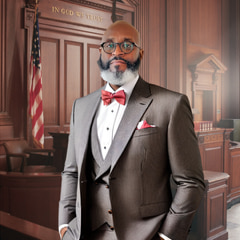
Carl Shawn Watkins
Author, Attorney Leadership Strategist, Keynote Speaker
BA in Law, MBA/MSOL Candidate April 2027, Aspiring JD