
Walk into almost any law firm and you will find no shortage of confidence. Attorneys are trained to argue a position, hold a line under cross-examination, and project certainty even when the underlying facts are messy. What you will find far less of — even in firms full of brilliant, accomplished lawyers — is courage. Not the courage to win an argument, but the courage to lead: to have the conversation you've been avoiding, to admit the mistake before someone else finds it, to develop a rival instead of quietly sidelining them, to tell a founding partner something they don't want to hear.
The legal industry has a courage deficit, and it is costing firms far more than most of them realize.
Confidence Is Not Courage
It is worth being precise about the distinction, because the legal profession is easy to mistake for an industry full of courageous people. Litigators walk into courtrooms every day. Deal attorneys negotiate high-stakes transactions under enormous pressure. None of that is easy, and none of it should be minimized.
But confidence under adversarial pressure is a different skill than courageous leadership. Confidence says, "I can hold my position." Courageous leadership says, "I can hold myself accountable, even when no one is forcing me to." One is trained relentlessly in law school and in practice. The other is almost never trained at all.
Only 14% of managing partners have received any formal leadership training, despite being responsible for the culture, retention, and long-term health of their entire firm. The profession spends years sharpening the skill of advocacy and almost no time developing the skill of leadership — and then is surprised when brilliant lawyers become fear-avoidant leaders.
Why the Legal Industry Is Especially Prone to This Gap
This isn't a character flaw unique to attorneys. It's a structural outcome of how the profession is built.
The promotion path rewards the wrong skill. Firms promote based on billable performance, origination, and legal skill — then hand that same person a team to lead, a budget to manage, and a culture to shape, with no transition and no training. Being an excellent lawyer and being a courageous leader are different competencies. The profession routinely assumes the first guarantees the second.
Risk-aversion is the job — until it isn't. Attorneys are trained to minimize exposure, hedge every position, and avoid unnecessary risk. That instinct serves clients well in a transaction or a case. It serves leadership poorly, because courageous leadership requires the opposite muscle: naming an uncomfortable truth in a partner meeting, disagreeing publicly with a senior colleague, or making a decision without total certainty. A profession trained to minimize risk will always find it easier to avoid a hard conversation than to have one.
The hierarchy discourages dissent. Traditional partnership structures reward seniority and tenure. Junior and mid-level attorneys quickly learn that raising concerns to a senior partner carries real career risk, while staying quiet carries none. Over time, that produces firms full of smart people who have learned that silence is safer than candor — which is precisely the opposite of the culture courageous leadership requires.
Billable pressure crowds out development. Leadership development takes time: mentoring conversations, honest feedback, difficult check-ins. In a culture measured almost entirely by billable hours, none of that is billable — so it is the first thing to disappear from a partner's calendar, not because it doesn't matter, but because nothing forces it to.
What the Absence of Courage Actually Costs
This isn't an abstract cultural critique. The courage deficit shows up directly on the balance sheet.
Nearly three in four attorneys report symptoms of burnout — much of it tied not to workload alone, but to leadership environments where people cannot speak candidly or be heard.
$315,000 is the average cost of replacing a single associate — a number driven as much by leadership failure as by market competition for talent.
71% of attrition in professional services firms is linked to poor leadership culture, not compensation.
58% of job performance is driven by emotional intelligence, not legal knowledge or technical skill — meaning the very capability the profession trains least is the one most responsible for whether people actually perform and stay.
Every one of those numbers represents a moment where a leader chose comfort over a hard conversation, and the firm paid for it later — in a resignation letter, a malpractice near-miss nobody reported early, or a client relationship that quietly eroded because no one wanted to deliver difficult news directly.
Fear-Based Leadership Is Still the Default
In the absence of deliberate leadership development, firms don't end up with a leadership vacuum — they end up with fear-based leadership by default. Partners lead the way they were led: through pressure, through unspoken expectations, through a culture where mistakes are hidden rather than surfaced early. It isn't malicious. It's simply what happens when courage is never taught and fear is the path of least resistance.
Fear-based leadership produces compliance. Associates show up, bill their hours, and protect themselves. What it does not produce is the kind of culture where people escalate a problem while it's still small, give a partner honest feedback about a blind spot, or stay at a firm because they trust the people leading it — not just because the paycheck is competitive.
Naming the Gap Is the First Step
The legal industry doesn't lack talent, intelligence, or work ethic. It lacks a deliberate system for developing the one skill law school and early practice never taught: how to lead people, not just cases. Courageous leadership isn't a personality trait some partners happen to have and others don't. It's a set of habits and frameworks — the same way legal skill is built through years of mentorship, practice, and deliberate repetition rather than instinct alone.
Firms that name this gap honestly, rather than assuming strong legal skill will eventually produce strong leadership on its own, are the ones positioned to actually close it. That work is the foundation of what I built The Legal Leadership Accelerator System™ to do — but the starting point, for any firm, is simpler than a program. It's an honest look at whether the leadership in the room was ever actually trained, or just promoted.
The people you lead will rise no higher than the courage you model.
If you're ready to have an honest conversation about where that gap shows up in your firm or organization, that conversation starts at https://cswleadership.com.
Carl Shawn Watkins is the Founder of Carl Shawn Watkins Consulting™ and Courage2Connect Coaching™, and the creator of The Legal Leadership Accelerator System™.
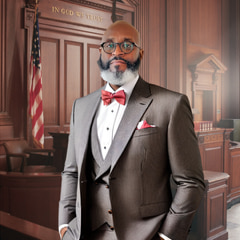
Carl Shawn Watkins
Author, Attorney Leadership Strategist, Keynote Speaker
BA in Law, MBA/MSOL Candidate April 2027, Aspiring JD